Gelagen publishes all thirteen nutrient amounts with their percentages of Daily Value. That makes a complete audit possible — and it is worth stating plainly that the largest page competing for this product publishes none of them and names only five ingredients.
The direct answer
All thirteen amounts are printed: biotin 5,000 mcg (16,667%), B12 6 mcg (250%), B6 2 mg (118%), folate 442 mcg DFE (111%), pantothenic acid 5.2 mg (104%), vitamin A 630 mcg (70%), vitamin D 10 mcg (50%), vitamin E 7.4 mg (49%), iodine 42 mcg (28%), zinc 2.7 mg (25%), vitamin C 20 mg (22%), choline 0.04 mg (0%) and inositol 40 mcg.
The full panel
| Nutrient | Per serving | %DV | Reference intake |
|---|---|---|---|
| Biotin | 5,000 mcg | 16,667% | 30 mcg/day adequate intake for adults |
| Vitamin B12 (as methylcobalamin) | 6 mcg | 250% | 2.4 mcg/day RDA for adults |
| Vitamin B6 (as pyridoxine hydrochloride) | 2 mg | 118% | 1.3–1.7 mg/day RDA for adults |
| Folate (442 mcg DFE, from 260 mcg folic acid) | 442 mcg DFE | 111% | 400 mcg DFE/day RDA for adults |
| Pantothenic acid (as d-calcium pantothenate) | 5.2 mg | 104% | 5 mg/day adequate intake for adults |
| Vitamin A (as retinyl acetate) | 630 mcg | 70% | 700–900 mcg RAE/day RDA; 3,000 mcg upper limit |
| Vitamin C (as ascorbic acid) | 20 mg | 22% | 75–90 mg/day RDA; skin studies often use far more |
| Vitamin D (as cholecalciferol) | 10 mcg (400 IU) | 50% | 15–20 mcg/day RDA for adults |
| Vitamin E (as d-alpha tocopheryl acetate) | 7.4 mg | 49% | 15 mg/day RDA for adults |
| Zinc (as zinc citrate) | 2.7 mg | 25% | 8–11 mg/day RDA for adults |
| Iodine (as potassium iodide) | 42 mcg | 28% | 150 mcg/day RDA for adults |
| Choline (as choline bitartrate) | 0.04 mg (40 mcg) | 0% | 425–550 mg/day adequate intake for adults |
| Inositol | 40 mcg | no DV established | 2,000–4,000 mg/day in most human studies |
Gelagen supplies 5,000 mcg of biotin per serving. The FDA has warned that high-dose biotin interferes with many laboratory blood tests, including the troponin assays used to diagnose heart attacks. Tell your doctor and the lab that you take it, every time, and follow any advice to stop it before testing.
The four form choices that went the better way
These are the details that separate a competently drafted label from a cheap one, and Gelagen gets four of them right. Each costs more than the alternative.
- Vitamin B12 as methylcobalamin rather than cyanocobalamin — an already-active, well-absorbed form.
- Zinc as zinc citrate rather than zinc oxide, which is the cheap default and the least well absorbed of the common salts.
- Vitamin E as d-alpha tocopheryl acetate — the natural d- form, roughly twice as biologically active as synthetic dl-.
- Folate printed with its DFE conversion — 442 mcg DFE from 260 mcg folic acid. Easy to omit, and most labels do.
Somebody who understood nutrition drafted this panel. That is the finding, and it sits oddly beside artwork claiming the product contains collagen.
The two lines that round to nothing
Choline at 0.04 mg. The adult adequate intake is 425 to 550 mg, so this serving supplies roughly one ten-thousandth of it. The panel prints it as 0% of the Daily Value, which is honest — and which is also the clearest possible statement that the ingredient is there for the list rather than for you. One egg contains about 147 mg, roughly 3,675 times this serving.
Inositol at 40 mcg. Human studies of inositol use two to four grams daily. Forty micrograms is about one fifty-thousandth of the lower figure. There is no Daily Value established, so the panel correctly prints a dagger rather than a percentage.
Comparing Gelagen bundles
The Gelagen discount is applied by bundle size: $79 a bottle for two, $69 for three, $49 for six. Three bottles covers a fair 8-to-12-week assessment and ships free.
Check Gelagen Bundle PricesOfficial website checkout · 60-day guarantee · confirm the terms before paying
Every nutrient, examined
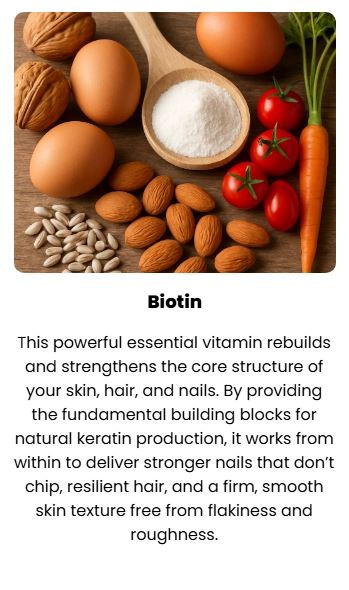
1. Biotin — 5,000 mcg (16,667%) Needs care
Why is there 5,000 mcg of biotin in Gelagen?
Because that is the conventional dose in beauty gummies, not because 5,000 mcg is established as necessary. The adult adequate intake is 30 mcg, so this serving is roughly 167 times it. Biotin deficiency genuinely damages hair and nails — but deficiency is rare in people eating normally.
This is the single largest number on the label and the one that deserves the most care. The evidence for biotin improving hair or nails in people who are not deficient is thin; the strongest results come from correcting a genuine deficiency. There is also a specific, well-documented safety issue: the FDA has warned that high-dose biotin interferes with many laboratory blood tests, including troponin, the test used to diagnose heart attacks. It can push results falsely high or falsely low depending on the assay.
Worth knowing: Tell any doctor or lab that you take high-dose biotin, and stop it several days before blood work where advised. · NIH ODS — Biotin
2. Vitamin B12 (as methylcobalamin) — 6 mcg (250%) Supported
Is Gelagen's B12 a good form?
Yes — methylcobalamin is a well-absorbed, already-active form, and 6 mcg covers 250% of the Daily Value. Choosing it over cheaper cyanocobalamin is a genuine quality signal, and it is one of the better decisions on this panel.
B12 supports DNA synthesis and cell division, which is the mechanism behind the cellular-renewal framing used for skin. That framing is reasonable. The caveat is the usual one: correcting a deficiency helps, and exceeding an adequate intake generally does not. B12 deficiency is more common in people over 50, vegans, and long-term users of metformin or acid-suppressing medication — those are the people most likely to notice anything.
Worth knowing: Water-soluble and well tolerated. Excess is excreted. · NIH ODS — Vitamin B12
3. Vitamin B6 (as pyridoxine hydrochloride) — 2 mg (118%) Supported
What does vitamin B6 do for skin?
B6 is a cofactor in amino acid and lipid metabolism, and genuine deficiency causes a characteristic dermatitis. At 2 mg, or 118% of the Daily Value, Gelagen supplies a sensible nutritional amount — comfortably above the RDA and nowhere near the levels that cause problems.
The oil-and-pore-balance framing used for B6 in this category runs ahead of the evidence; what is well established is that deficiency causes skin changes, not that supplementing an adequate diet controls shine. Worth knowing for scale: sustained very high doses of B6, in the hundreds of milligrams, are associated with peripheral nerve damage. At 2 mg that is not a concern here, and it is useful context for anyone stacking several B-complex products.
Worth knowing: No concern at 2 mg. Watch cumulative B6 if you take several supplements. · NIH ODS — Vitamin B6
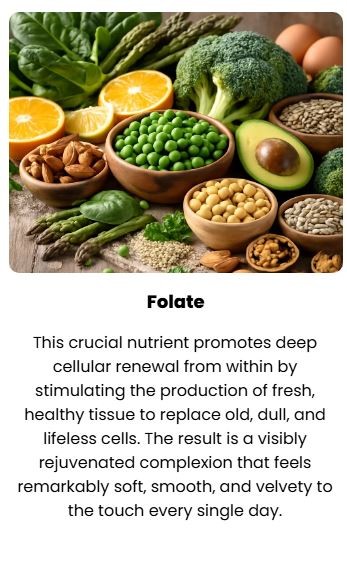
4. Folate (442 mcg DFE, from 260 mcg folic acid) — 442 mcg DFE (111%) Supported
Why does Gelagen's folate show two numbers?
Because the panel converts correctly. Folic acid is absorbed more efficiently than food folate, so 260 mcg of folic acid equals 442 mcg of dietary folate equivalents. Printing both figures is exactly what a properly drafted panel should do, and most do not bother.
This is a small detail that tells you something real about who drafted the label. The DFE conversion is easy to get wrong or simply omit, and getting it right signals competence. Folate supports DNA synthesis and cell division, which underpins the cellular-renewal claim. At 111% of the Daily Value it is a sensible nutritional amount rather than a megadose.
Worth knowing: High folic acid intake can mask B12 deficiency. Relevant if you take several fortified products. · NIH ODS — Folate
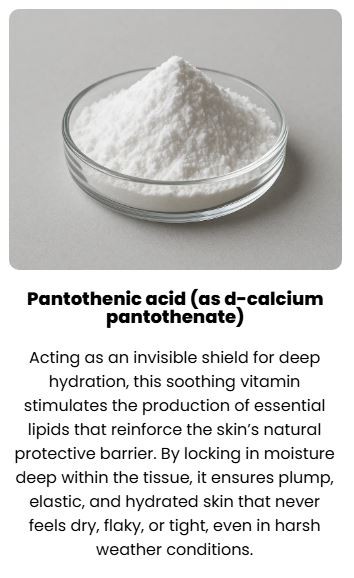
5. Pantothenic acid (as d-calcium pantothenate) — 5.2 mg (104%) Supported
Does pantothenic acid help the skin barrier?
Pantothenic acid is the precursor to coenzyme A, which the body uses to build the lipids in the skin barrier. Gelagen supplies 5.2 mg, or 104% of the Daily Value — a properly judged nutritional amount matching the adequate intake almost exactly.
The barrier-support framing is mechanistically reasonable and the dose is honest. The caveat: deficiency in this vitamin is genuinely rare, because it is present in almost all foods — the name comes from the Greek for 'from everywhere'. So this line is well judged, and for most people it is topping up something already adequate.
Worth knowing: Very well tolerated at this amount. · NIH ODS — Pantothenic Acid
6. Vitamin A (as retinyl acetate) — 630 mcg (70%) Partly never named by competitor
How much vitamin A is in Gelagen, and does it matter?
630 mcg as retinyl acetate, covering 70% of the Daily Value. This is preformed vitamin A — the same family as retinol — and it has the most direct established relationship with skin of anything on this panel. The competing page never mentions it.
Vitamin A regulates keratinocyte differentiation and is the nutrient behind the entire retinoid class in dermatology. A genuinely relevant inclusion. It is also the one that needs a caution rather than applause: preformed vitamin A accumulates, the adult upper limit is 3,000 mcg RAE daily from all sources, and high intake in pregnancy carries a teratogenic risk. At 630 mcg this serving is well within limits — but if you also take a multivitamin, a cod liver oil or an oral retinoid, the total is what counts.
Worth knowing: Preformed vitamin A accumulates. Avoid stacking sources, and speak to a doctor if pregnant or taking an oral retinoid. · NIH ODS — Vitamin A
7. Vitamin C (as ascorbic acid) — 20 mg (22%) Partly never named by competitor
Is 20 mg of vitamin C enough to matter for skin?
It is a modest contribution. Vitamin C is an essential cofactor for the enzymes that build collagen, which makes it genuinely relevant to skin — but 20 mg is 22% of the Daily Value, well under the 75–90 mg RDA and far below the amounts used in most research.
This is the nutrient people expect to see in a skin product, and here it is present at about a fifth of a day's requirement. A single orange supplies more. That is not a scandal — it is a contribution rather than an intervention — but it does matter to the collagen framing this category leans on, because collagen synthesis requires vitamin C as a cofactor and Gelagen supplies a fraction of a day's worth.
Worth knowing: Very well tolerated. Large doses can cause stomach upset; 20 mg will not. · NIH ODS — Vitamin C
8. Vitamin D (as cholecalciferol) — 10 mcg (400 IU) (50%) Partly never named by competitor
Why is vitamin D in a skin gummy?
Vitamin D is made in skin on sun exposure and has roles in keratinocyte growth and immune regulation, so its presence is defensible. Gelagen supplies 10 mcg, or 400 IU, covering 50% of the Daily Value. The competing page does not mention it.
Deficiency is common, particularly at higher latitudes, in winter, in older adults and in people who cover up or use sunscreen consistently — which, given sunscreen is the single most evidence-based thing anyone can do for skin ageing, is a real overlap. Half a day's worth is a sensible top-up rather than a treatment. If you suspect deficiency, a blood test is the answer, not a gummy.
Worth knowing: Fat-soluble and accumulates. Watch the total if you take a separate D supplement. · NIH ODS — Vitamin D
9. Vitamin E (as d-alpha tocopheryl acetate) — 7.4 mg (49%) Partly never named by competitor
What does vitamin E contribute here?
Vitamin E is the main fat-soluble antioxidant in cell membranes and in sebum, which makes it a reasonable inclusion for skin. Gelagen supplies 7.4 mg, or 49% of the Daily Value, in the natural d-alpha form rather than the cheaper synthetic dl.
The d- prefix is worth noticing: natural d-alpha-tocopherol is roughly twice as biologically active as the synthetic dl- form, and choosing it costs more. Together with methylcobalamin and zinc citrate, it is the third form choice on this panel that went the better way. Vitamin E works alongside vitamin C in the antioxidant network, which is part of why they appear together.
Worth knowing: High-dose vitamin E can affect clotting. Not a concern at 7.4 mg. · NIH ODS — Vitamin E
10. Zinc (as zinc citrate) — 2.7 mg (25%) Partly never named by competitor
Is Gelagen's zinc a useful amount?
The form is good and the amount is small. Zinc citrate absorbs considerably better than zinc oxide, which is the cheap default. At 2.7 mg it supplies 25% of the Daily Value — a quarter of a day's requirement.
Zinc has the clearest dermatological credentials of any mineral: deficiency causes a well-described skin eruption, and zinc is used in acne management at much higher doses. A quarter of a day's requirement is a contribution rather than a therapeutic amount. The form choice is the story here — it costs more and absorbs better, and it is the kind of decision a buyer can only notice if the label prints it.
Worth knowing: Long-term high zinc competes with copper. Not a concern at 2.7 mg. · NIH ODS — Zinc
11. Iodine (as potassium iodide) — 42 mcg (28%) Partly never named by competitor
Why is iodine in a beauty gummy?
Iodine is required for thyroid hormone, and thyroid dysfunction is a genuine, frequently missed cause of hair loss, brittle nails and dry skin. Its presence is more defensible than it first looks. Gelagen supplies 42 mcg, 28% of the Daily Value.
The logic is sound and the dose is modest. Two cautions matter more here than the amount suggests. Iodine has a narrow window — both too little and too much cause thyroid problems — and anyone with existing thyroid disease or on thyroid medication should raise it with their doctor before adding an iodine source. Also worth knowing: if hair loss is why you are here, thyroid function and ferritin are blood tests worth having rather than guessing at.
Worth knowing: Speak to your doctor before adding iodine if you have any thyroid condition or take levothyroxine. · NIH ODS — Iodine
12. Choline (as choline bitartrate) — 0.04 mg (40 mcg) (0%) Needs care never named by competitor
How much choline is in Gelagen?
Forty micrograms — which the panel itself rounds to 0% of the Daily Value. The adult adequate intake is 425 to 550 milligrams, so this serving supplies roughly one ten-thousandth of it. The label is being honest; the number is simply negligible.
Give the panel credit for printing 0% rather than hiding the line. But an ingredient present at 0.007% of its reference intake is on the label for the ingredient list, not for the body. If choline is something you want, an egg supplies roughly 147 mg — about 3,675 times this serving. This is the clearest example on the panel of what label decoration looks like when the amounts are actually published.
Worth knowing: No effect either way at this amount. · NIH ODS — Choline
13. Inositol — 40 mcg (no DV established) Needs care never named by competitor
Is there a meaningful amount of inositol in Gelagen?
No. Human studies of inositol — mostly in PCOS and metabolic health, not skin — use two to four grams a day. Gelagen contains 40 micrograms, which is roughly one fifty-thousandth of the lower end of that range.
Inositol has no established Daily Value, so the panel prints a dagger rather than a percentage, which is correct. The gap here is the largest on the whole label: to reach a studied intake from this product you would need around 50,000 servings a day. Alongside choline, this is the second ingredient present in an amount that cannot do anything, and naming both plainly is the most useful thing an honest review of this product can do.
Worth knowing: No effect either way at this amount. · NCCIH — dietary supplements
What is not on the panel
Offered as context for comparing products, and particularly relevant if the supplied artwork is what brought you here:
- Hydrolysed collagen peptides
- Hyaluronic acid
- Ceramides
- Astaxanthin
- Coenzyme Q10
- Omega-3 fatty acids
- Silica or horsetail extract
- Probiotics
Cautions and interactions
- Biotin and blood tests: the FDA warning above. This is the most practically important line on this page.
- Vitamin A is cumulative: 3,000 mcg RAE is the adult upper limit from all sources. Add up multivitamins, cod liver oil and any oral retinoid.
- Pregnancy: high preformed vitamin A carries a teratogenic risk. Speak to a doctor before use.
- Thyroid conditions: iodine has a narrow window. Ask before adding a source if you take levothyroxine or have a diagnosed thyroid condition.
- Folic acid and B12: high folic acid intake can mask B12 deficiency. Relevant if you take several fortified products.
- Sugar: 3 g added sugar and 10 calories per serving.
Read how these work together, or see the claim-by-claim benefit rulings.
Questions people ask about this
What are the ingredients in Gelagen?
Per two-gummy serving: biotin 5,000 mcg, vitamin B12 as methylcobalamin 6 mcg, vitamin B6 2 mg, folate 442 mcg DFE, pantothenic acid 5.2 mg, vitamin A as retinyl acetate 630 mcg, vitamin D 10 mcg, vitamin E 7.4 mg, iodine 42 mcg, zinc as zinc citrate 2.7 mg, vitamin C 20 mg, choline 0.04 mg and inositol 40 mcg.
Is 5,000 mcg of biotin too much?
Biotin is water-soluble with no established upper limit, so toxicity is not the concern. The documented issue is interference with laboratory blood tests, including troponin assays. Tell your doctor and the lab that you take it.
Why is there choline and inositol in such small amounts?
That is the fair question. Choline at 0.04 mg is printed by the label itself as 0% of the Daily Value, and inositol at 40 mcg is roughly one fifty-thousandth of the amounts used in human studies. Both are ingredient-list entries rather than functional doses.
Does Gelagen contain iron?
No. Iron is not on the panel, which is worth knowing because iron deficiency is one of the most common nutritional causes of hair loss and is diagnosed with a ferritin blood test rather than guessed at.
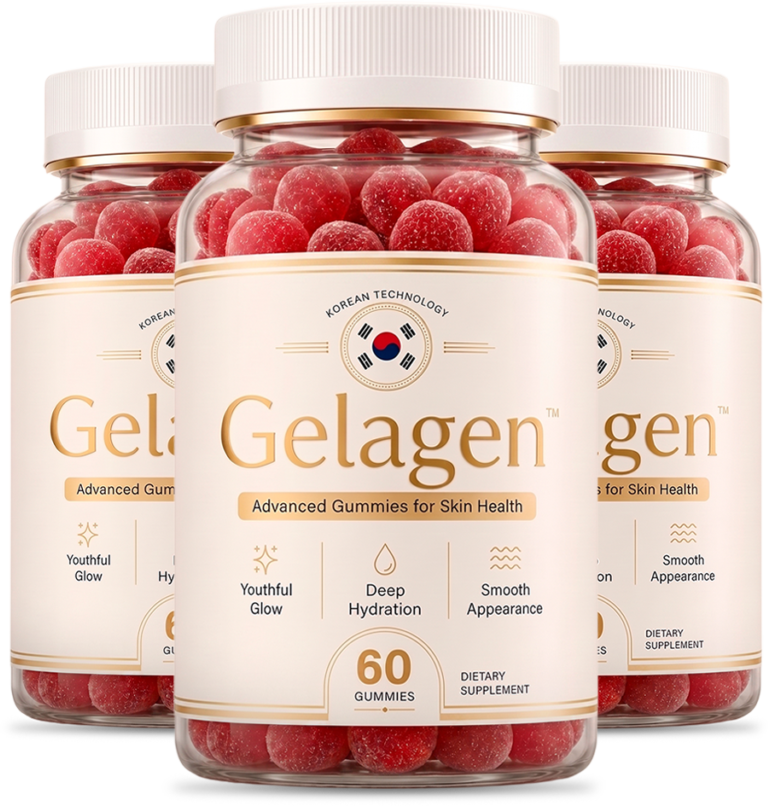
Gelagen Official Website
per bottle on the 6-bottle pack · free US shipping on 3 and 6
Check Current Price 60-day guarantee · official checkout only